Itineraries
Driving the Ourika Valley: From Marrakech to Setti Fatma
About 65 km and 1 h 15 by road: how to enjoy the Ourika Valley and Setti Fatma by car, avoid the crowds and stay safe near the water.
The Ourika Valley is the easiest nature outing from Marrakech: in just over an hour, the city gives way to mountains, mud-brick villages and a river that stays cool even in summer. At the end of the road, Setti Fatma is the starting point for a series of waterfalls. Here is how to go about it by car.
At a glance
- Distance: about 65 km to Setti Fatma.
- Duration: about 1 h 15 to 1 h 30 without stops.
- Road: paved, flat at first, then winding along the river.
- Recommended car: a small car is enough, an SUV for extra comfort with the family.
A road that follows the river
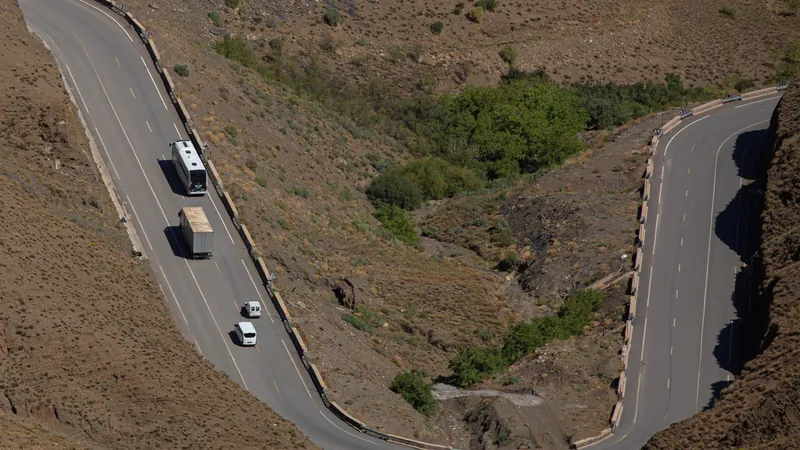
You leave Marrakech to the south and first cross a plain of olive groves and small farms. The peaks of the High Atlas draw closer, then the road enters the valley and hardly leaves the wadi. The last kilometres before Setti Fatma are narrower, with bends and villages where pedestrians walk on the carriageway.
Along the way, you will see stalls selling pottery, fruit or wooden objects, and cafés set up by the water. Stop wherever you like, but park well onto the verge: the road is busy, notably with grands taxis and excursion minibuses.
Weekday or weekend: what changes
The valley is also where Marrakchis go to unwind. At weekends, on public holidays and in hot spells, traffic gets heavy on the last stretch, and parking spaces become scarce in Setti Fatma. On a weekday, the same trip is much quieter.
If you can only come on a Saturday or Sunday, leave early, around 8 or 9 am. You will find somewhere to park more easily, and the return will be ahead of the late-afternoon traffic jam heading to Marrakech.
In Setti Fatma: parking and climbing to the waterfalls
The road ends at the village. Attendants direct cars to parking areas; it is customary to pay them, so ask the rate when you arrive. As elsewhere, leave nothing visible inside the car.
The waterfall trail
The path starts from the village, crosses the river on footbridges or stepping stones, then climbs between the rocks. It is no stroll in smooth-soled trainers: bring shoes with good grip, water, and keep your hands free to help yourself on some sections. The first waterfall is the busiest; the ones further up take more effort.
With a local guide
Guides from the village offer to accompany you. It is not compulsory, but their help is useful if you want to go beyond the first fall or if you are with children. Agree on the price and the route before setting off.
For lunch, the valley's restaurants often set their tables up by the water, sometimes with your feet almost in the river. It is lovely, but read the next section first.
Flash floods and storms: the precaution that matters
The Ourika is a mountain river. In spring, melting snow swells its flow. In summer and early autumn, a storm breaking over the peaks can make the water rise within minutes, while the sky above you stays blue. The valley has in the past seen sudden and deadly floods.
- Check the mountain forecast before leaving, not just the one for Marrakech.
- Do not settle in the riverbed, and never park the car on a bank or a gravel bar.
- Water turning muddy, a rumble growing louder, branches being carried along: head back up to the road immediately.
- Do not drive through a water crossing whose bottom you cannot see.
- Listen to the locals and restaurant owners: if they are clearing the tables, leave.
Which car, and how to round out the outing
The road is paved all the way: there is no need to aim big. A city car such as the Peugeot 208 automatique or the Dacia Sandero slips through easily and parks without trouble in Setti Fatma. The whole range of small cars suits this trip. With four or five adults, an SUV gives a little more room in the rear seats.
Oukaïmeden or Imlil, another day
Two other mountain outings start in the same direction. The Oukaïmeden resort, about 75 km and 1 h 30 from Marrakech, peaks at around 2,600 m; in winter, check snow conditions and the state of the road. Imlil, at the foot of Toubkal, is about 65 km and 1 h 30 away, in another valley; you leave the car in the village before continuing on foot. Combining the Ourika and one of these outings on the same day is doable, but you would mostly spend your time at the wheel. Keep them for separate days.
We deliver the car to your hotel or riad, for example in the Agdal district, so you can set off straight away. For a longer excursion, see our article on the Ouzoud waterfalls.
To conclude
The Ourika works very well as a half-day or a relaxed full day, provided you avoid the crowds and keep an eye on the river. Give your date and pick-up location in the form; we confirm everything with you on WhatsApp.
Frequently asked questions
Is the Ourika road difficult to drive?
No. It is paved all the way to Setti Fatma, fairly flat at first, then winding along the river. The last kilometres are narrower and pass through villages where pedestrians walk on the carriageway. At weekends, it is mainly traffic that slows the trip.
Do I need a guide to climb to the Setti Fatma waterfalls?
It is not compulsory. The path crosses the river and climbs between rocks; a guide from the village helps find the right way, especially beyond the first waterfall or with children. Agree on the price and the route before setting off.
Can I combine the Ourika and Oukaïmeden in the same day?
It is doable, but the day is then spent mostly in the car, on mountain roads. It is better to set aside one day for each outing. In winter, check snow conditions and the state of the road before heading up to Oukaïmeden.